A Guide to Facial Lifting Procedures: Surgical and Non-Surgical Options
Read about A Guide to Facial Lifting Procedures: Surgical and Non-Surgical Options on Wonderful Plastic Surgery
In 2020 alone, over 13 million minimally invasive cosmetic procedures were performed in the U.S. This remarkable statistic highlights a universal aspiration: to look as vibrant as we feel, reflecting our inner vitality. However, the journey to a more youthful appearance often comes with questions, particularly around achieving natural results and understanding all available options.
Navigating the world of facial rejuvenation can feel overwhelming, with countless options and varying outcomes. Our goal is to demystify this exciting field, providing clarity on the full spectrum of modern facial lifting procedures. We believe that with the right knowledge, you can make informed decisions to achieve safe, natural-looking rejuvenation that truly enhances your confidence.
The Spectrum of Facial Rejuvenation: A Summary
Facial rejuvenation offers a diverse spectrum of options to refresh your appearance safely, from temporary non-invasive treatments to comprehensive surgical solutions. These paths are primarily distinguished by what they address and their longevity.
Non-surgical approaches, like dermal fillers and laser therapies, are excellent for correcting volume loss and improving skin texture. Their results typically last from months to a few years. Over 13 million minimally invasive cosmetic procedures were performed in the U.S. in 2020 (Cleveland Clinic).
Conversely, surgical facelifts (rhytidectomy) are designed to tackle significant sagging in the cheeks, jowls, and neck by repositioning deeper tissue layers. These procedures offer enduring results, often lasting 10-15 years (Mayo Clinic; Virginia Facial Plastic Surgery).
Recovery times vary dramatically, ranging from no downtime for injectables to a two-to-three-week period for a full surgical procedure. Crucially, selecting a board-certified facial plastic surgeon with extensive experience is paramount for a safe, natural-looking outcome.
Understanding the distinction between addressing volume/texture (non-surgical) versus structural laxity (surgical) is the first step toward choosing the right facial rejuvenation path.
Non-Surgical Options: Refreshing Your Look Without Surgery
Many individuals seek to revitalize their appearance and address early signs of aging without committing to invasive surgical procedures. The good news is that a diverse range of non-surgical options offers remarkable ways to achieve a refreshed, youthful glow with minimal downtime. These innovative treatments often work in combination to target specific concerns, providing a comprehensive "lift" effect without large incisions or general anesthesia.
Non-surgical facelifts leverage a blend of aesthetic treatments to rejuvenate the face, offering noticeable improvements for those with mild to moderate aging signs. These methods primarily focus on restoring volume, smoothing wrinkles, and enhancing skin texture.
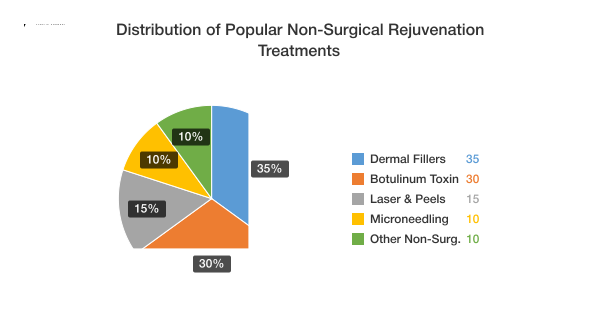
Here are some of the most common and effective non-surgical facial rejuvenation treatments:
Dermal Fillers
These injectable gels, often made with Hyaluronic Acid, are exceptional for restoring lost volume, a common sign of aging. They can plump up sunken cheeks, define lips, and smooth deep wrinkles or folds around the mouth and nose. Dermal fillers provide immediate results, and their effects can last from six months to several years, depending on the product and treatment area. The concept of a 'liquid facelift' often utilizes these fillers to strategically add volume and contour, creating a subtle, uplifted look.Botulinum Toxin
Known widely by brand names like Botox®, this treatment expertly relaxes specific facial muscles responsible for dynamic wrinkles—those that appear with expression. It effectively smooths lines such as crow's feet around the eyes, frown lines between the eyebrows, and forehead creases. Results typically become visible within a few days and last up to three months before a touch-up is needed.Laser Skin Resurfacing and Chemical Peels
These treatments focus on improving skin quality and tone. Laser skin resurfacing uses focused light energy to remove the outer layers of damaged skin, stimulating the body's natural collagen production for firmer, smoother skin. Similarly, chemical peels apply a solution to exfoliate and eventually peel away the top skin layers, revealing healthier, more radiant skin underneath. Both methods are excellent for reducing fine lines, improving texture, and evening out skin tone.Microneedling
This procedure involves using a device with fine needles to create controlled micro-injuries on the skin's surface. These tiny punctures prompt the skin to initiate its natural healing process, significantly boosting the production of collagen and elastin. Over time, this leads to improved skin texture, reduced scarring, and enhanced firmness.
Note: While these non-surgical treatments offer fantastic results for early or mild signs of aging, it's crucial to set realistic expectations. They are not effective for correcting significant skin sagging, prominent jowls, or profound structural changes that often accompany advanced aging. The American Academy of Facial Plastic and Reconstructive Surgery (AAFPRS) clarifies that injectables and skin treatments primarily address superficial concerns rather than providing a true structural lift.
The key to successful non-surgical rejuvenation is finding the right combination of treatments that aligns with your individual goals, offering a refreshed and confidently rejuvenated appearance.
The Surgical Facelift: Addressing Deeper Signs of Aging
When signs of aging extend beyond superficial lines, a surgical facelift, medically known as a rhytidectomy, offers a profound solution. This definitive procedure is designed to reverse the effects of gravitational aging by meticulously restoring the foundational structures of the face, going far beyond surface treatments. It effectively repositions underlying facial muscles and tissues, while carefully removing excess skin to create a more youthful contour.
A facelift primarily targets the lower two-thirds of the face, an area where gravity often leaves its most noticeable marks. It excels at addressing sagging cheeks, deep creases that run from the nose to the mouth (nasolabial folds), prominent jowls along the jawline, and loose, lax skin on the neck. This comprehensive approach ensures a harmonious rejuvenation that revitalizes the entire lower face and neck.
It's important to understand what a facelift can and cannot correct. While it dramatically improves sagging and deep folds, it does not correct issues like skin texture irregularities, sun damage, or fine surface wrinkles. These concerns are often best addressed through complementary procedures, such as laser resurfacing or chemical peels, which can be discussed during your personalized consultation.
Ideal candidates for a surgical facelift are typically individuals in good overall health who are non-smokers. Good skin elasticity is also beneficial, as it allows the skin to redrape smoothly after the underlying tissues are adjusted. Crucially, successful outcomes hinge on possessing realistic expectations about the transformation. Patients who are too young or lack significant skin laxity may find themselves dissatisfied with the results, potentially leading to an unnatural appearance, as highlighted in numerous patient testimonials (Reddit). In fact, smoking significantly increases the risk of poor wound healing and skin loss, making it a critical factor for candidacy (Plastic and Reconstructive Surgery Journal).
Note: Selecting the right procedure for your unique needs is paramount. A thorough evaluation ensures the surgical facelift aligns with your aesthetic goals and provides the most natural, satisfying outcome.
A surgical facelift is the most definitive procedure for reversing gravitational aging by restoring the foundational structures of the face, rather than just treating the surface.
Comparing Surgical Techniques: SMAS, Deep Plane, and Mini-Lifts
The journey toward a revitalized appearance often begins with understanding the options available. Modern facial lifting procedures have advanced significantly from earlier, simpler techniques, now offering more refined and natural-looking outcomes. These advancements focus on rejuvenating not just the skin, but also the deeper tissues that contribute to a youthful contour.
Today's facelifts go beyond mere skin excision, moving towards intricate manipulation of the Superficial Musculo-Aponeurotic System (SMAS). This critical layer of facial tissue, located beneath the subcutaneous fat and extending down to the platysma muscle in the neck (EyeWiki), is key to achieving lasting and harmonious results. Choosing the right technique is a personalized process, aligning with your unique anatomy and specific aging concerns.

Understanding Your Options
Let's explore the primary surgical techniques that can help you reclaim a youthful profile:
Mini-Facelift (or S-Lift)
For those experiencing early signs of aging, the mini-facelift offers a less invasive solution. This technique uses shorter incisions, often confined to the hairline and around the ear, to address mild to moderate jowling and minimal neck laxity. It's an excellent choice for individuals seeking subtle yet noticeable improvements with a quicker recovery period. The procedure primarily targets the superficial layers, lifting and tightening the skin and underlying tissues in a focused manner.
SMAS Facelift
The SMAS facelift is perhaps the most commonly performed technique, recognized for its comprehensive results. During this procedure, the surgeon meticulously lifts and tightens the SMAS layer itself, in addition to redraping the skin. This dual-layer approach effectively addresses sagging in the mid-face, pronounced jowls, and significant neck laxity. By repositioning the SMAS, the results are more durable and natural, avoiding the pulled appearance associated with older facelift methods.
Deep Plane Facelift
Representing the forefront of facelift surgery, the deep plane technique is designed for more profound and durable rejuvenation. It involves the surgeon working beneath the SMAS layer, releasing key facial ligaments that contribute to sagging. This allows for a more powerful and unrestricted lift of the mid-face, cheeks, and neck as a single unit, rather than separating the skin from the muscle. Many surgeons believe the deep plane facelift provides the most natural-looking results, as it repositions the facial tissues in a way that mimics their youthful state. This advanced technique is particularly effective for patients with significant aging concerns and offers remarkable longevity.
Note: Each technique is carefully selected based on individual needs, aiming for results that enhance your natural beauty while prioritizing safety and longevity.
To help visualize the differences, consider this comparison:
| Technique | Invasiveness | Target Areas | Recovery Time | Ideal Candidate | Key Benefit |
|---|---|---|---|---|---|
| Mini-Facelift | Least | Mild jowling, early neck laxity | Faster | Mild to moderate facial aging, good skin elasticity | Subtle rejuvenation with minimal downtime |
| SMAS Facelift | Moderate | Moderate to significant jowling, neck laxity | Moderate | Moderate to advanced facial aging, defined jowls | Comprehensive lift, natural and durable |
| Deep Plane Facelift | Most | Significant mid-face sagging, jowling, neck bands | Longer | Significant facial aging, desire for profound results | Most natural, long-lasting, powerful mid-face lift |
The evolution of these techniques underscores a commitment to delivering personalized care and superior aesthetic outcomes. Your consultation will explore which method aligns perfectly with your goals and facial characteristics.
Choosing the right surgical technique is paramount for achieving your desired outcome; it’s about finding the optimal approach for your unique facial structure.
How to Choose a Qualified Facial Plastic Surgeon

Embarking on a journey to rejuvenate your appearance is an exciting step, and the most pivotal decision you'll make is selecting the right facial plastic surgeon. This choice is not merely about finding someone with a scalpel; it's about forming a partnership that dictates both your safety and the beauty of your final results. A successful outcome truly begins with a patient who has realistic goals, paired with an experienced, board-certified surgeon who prioritizes safety and a natural aesthetic.
Your surgeon's expertise and approach will define your entire experience, making this the single most important factor for both your well-being and aesthetic success.
Verifying Credentials and Specialization
The foundation of trust lies in proper certification. Always ensure your chosen surgeon is board-certified by a recognized board, such as the American Board of Facial Plastic and Reconstructive Surgery (ABFPRS). This certification signifies rigorous training, adherence to high standards, and a deep understanding of facial anatomy and surgical techniques.
Note: Board certification confirms a surgeon's qualifications and dedication to their specialty, serving as a critical indicator of their expertise and commitment to patient safety.
Beyond general certification, seek a specialist. The human face is incredibly intricate, requiring focused expertise. Look for a surgeon who dedicates their practice primarily to facial procedures and performs facelifts regularly. This specialization means they have honed their skills over countless procedures. For instance, data from the American Academy of Facial Plastic and Reconstructive Surgery (AAFPRS) indicates that 90% or more of its member surgeons have performed facelifts each year since 2019, highlighting the value of choosing a consistently active specialist.
Evaluating the Consultation Experience
The initial consultation is your opportunity to assess the surgeon and their team. A truly qualified surgeon will prioritize a comprehensive discussion, demonstrating their patient-centric approach:
- Active Listening: They should genuinely listen to your aesthetic goals and concerns.
- Thorough Analysis: Expect a detailed facial analysis, where they explain what is achievable for your unique anatomy.
- Clear Communication: Risks, benefits, and the recovery process should be explained clearly and transparently.
- Realistic Expectations: A good surgeon will set realistic expectations, ensuring you understand potential outcomes and limitations without making grand promises.
- No Pressure: You should never feel pressured into making a decision. Take your time, ask questions, and ensure you feel completely comfortable.
As highlighted by AAFPRS guidelines, a comprehensive consultation is paramount for informed consent and a positive patient experience.
Recognizing Red Flags
During your vetting process, be vigilant for warning signs that could indicate a less-than-ideal practice. These "red flags" can often be subtle but are crucial indicators:
- Dismissive Staff: As evidenced by negative patient experiences shared on platforms like Reddit, a dismissive surgical assistant or unhelpful front desk staff can be a major red flag, often reflecting the overall ethos of the practice.
- Lack of Before-and-After Photos: While patient privacy is important, reputable surgeons typically have an extensive portfolio of anonymized before-and-after photos demonstrating their consistent results.
- Vague Answers: Be wary if a surgeon or their staff provides vague answers about credentials, complication rates, or the specifics of the procedure. Transparency is key.
- Blame-Shifting: If you hear anecdotes or experience interactions where blame for poor outcomes is shifted away from the practice, proceed with caution.
Choosing your surgeon is an empowered decision that directly impacts your journey to enhanced beauty and safety, laying the groundwork for a truly transformative and secure experience.
The Facelift Journey: From Preparation to Final Results
Embarking on a facelift journey is a profound step towards reclaiming a more youthful and refreshed appearance. While the anticipation of renewed confidence is exciting, understanding the complete process—from initial preparation through the final reveal—is essential for a smooth experience and truly satisfying outcomes. This comprehensive roadmap will guide you through each stage, ensuring you are well-informed and prepared for the beautiful transformation ahead.
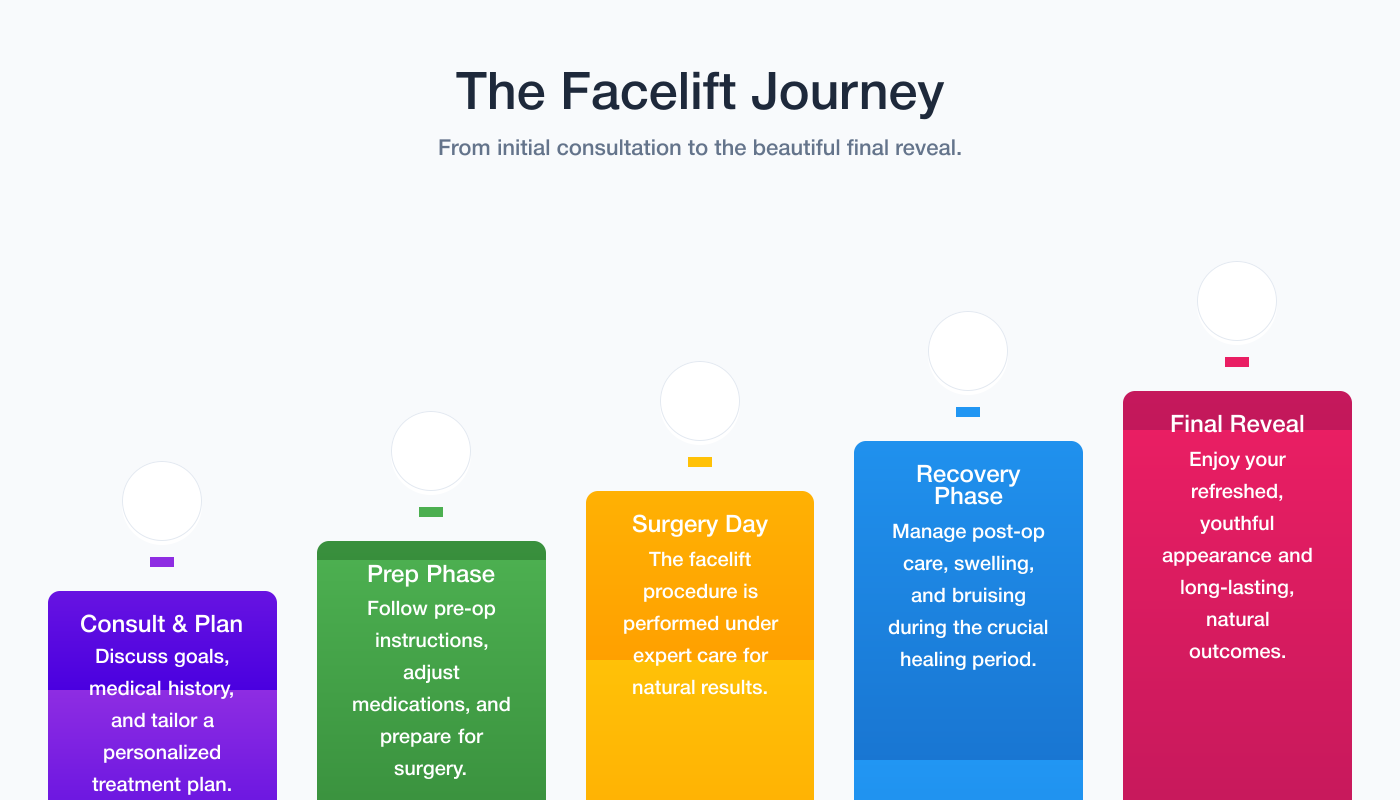
1. Meticulous Preparation: Setting the Stage for Success
Your journey begins well before surgery day with crucial preparatory steps designed to optimize your safety and results. You will receive detailed instructions, but generally, this includes stopping smoking entirely, as nicotine can significantly impair healing and increase complication risks. Additionally, it's vital to avoid blood-thinning medications and certain supplements—like aspirin, NSAIDs (e.g., ibuprofen), and fish oil—for at least two weeks prior to your procedure. This minimizes the risk of excessive bleeding during and after surgery, a key recommendation from the Mayo Clinic's pre-operative guidelines.
2. The Procedure: Artistry in Motion
On the day of your facelift, the focus shifts to meticulous surgical artistry. The procedure typically takes between 3 to 6 hours, as outlined by AAFPRS guidelines. Our skilled surgeons carefully place incisions within the natural hairline and discreetly around the contours of your ears. This thoughtful placement ensures that any resulting scars are minimally visible, blending seamlessly with your natural features for a refreshed, never "done" look.
3. Initial Recovery: The First Gentle Steps (Week 1)
The first week post-surgery is focused on gentle healing. You can expect some bruising, swelling, and temporary numbness, which are all normal parts of the process. Resting with your head elevated is critical to help reduce swelling. If tiny drainage tubes are placed during surgery, they are typically removed within 1-2 days. Stitches usually come out within 5-10 days, marking a significant early milestone in your recovery. Patience is truly your greatest ally during this initial phase.
4. Social Downtime: Easing Back In (Weeks 2-3)
By the second and third weeks, you'll notice a considerable reduction in significant swelling and bruising. Most patients feel comfortable enough to gradually return to work and social activities during this period. While subtle residual swelling may persist, it's generally manageable and easily concealed, allowing you to re-engage with your daily routine with growing confidence. This timeline aligns with typical recovery expectations for a facelift (AAFPRS guidelines).
5. Long-Term Results: Unveiling Your Refreshed Self
While you will observe a remarkable improvement early on, the final, refined results of your facelift will continue to emerge over several months. This is because residual swelling gradually resolves, and incision sites mature into fine, inconspicuous lines. A key insight here is that while modern techniques yield durable results, factors like genetics, lifestyle, and skincare play a role in maintaining them. Generally, a facelift can be expected to last 10 years or more, offering a lasting rejuvenation (Cleveland Clinic, 2023).
Note: Adhering strictly to your surgeon's post-operative instructions is paramount for optimal healing and minimizing risks. While rare, understanding potential complications like hematoma, which is the most common, ensures you're fully informed and prepared for all aspects of your recovery.
Successful facelift recovery is a patient, multi-week process that requires unwavering adherence to post-operative instructions to ensure proper healing and the most beautiful, lasting outcome.
Frequently Asked Questions
Understanding the practicalities of a facial lifting procedure is key. We've compiled answers to common questions, offering clarity and reassurance for your rejuvenation journey.
How much does a facelift cost, and is it covered by insurance?
A facelift typically ranges from $12,000 to $25,000 in the U.S., covering surgeon's fees, anesthesia, and facility costs. As a cosmetic procedure, it is not covered by health insurance (AAFPRS). We ensure transparent pricing upfront.
Will I have noticeable scars after surgery?
Our skilled surgeons meticulously place incisions within the hairline and natural creases around the ear. While initially present, these scars typically fade remarkably, becoming very difficult to detect. Our goal is natural rejuvenation with minimal intervention evidence.
What are the main risks associated with a facelift?
Patient safety is paramount. The most common complication is a hematoma, a collection of blood under the skin (Mayo Clinic, EyeWiki). Other potential risks include infection, temporary nerve damage, and poor scarring. These are minimized by choosing an experienced surgeon and diligently following recovery instructions.
How long can I expect the results of my facelift to last?
The rejuvenating effects of a facelift are wonderfully long-lasting, often enduring for 10 to 15 years (Virginia Facial Plastic Surgery). While natural aging continues, you will consistently enjoy a younger appearance than if you had not undergone the procedure. This lasting transformation brings immense satisfaction.
These practical questions provide a comprehensive understanding of the investment, risks, and remarkable outcomes, empowering your next steps.
In conclusion, the journey to a refreshed and more youthful appearance is both exciting and deeply personal. As we've explored, the world of facial lifting offers a diverse spectrum of options, carefully designed to meet varying needs and aesthetic goals.
Here are the key takeaways from our guide:
- A Full Spectrum of Choices: From non-surgical enhancements that restore subtle volume to advanced surgical lifts providing long-lasting structural support, there's a solution tailored for almost every rejuvenation goal.
- Informed Decisions are Empowering: Understanding the unique capabilities, benefits, and limitations of each procedure is paramount for making a confident choice and achieving truly natural-looking results.
- The Surgeon's Expertise is Non-Negotiable: Prioritizing the selection of a highly qualified and experienced facial plastic surgeon is the single most critical factor for ensuring both your safety and the successful realization of your aesthetic vision.
Ultimately, your desire for rejuvenation is a step towards embracing a more confident self. The key lies in finding the right approach that enhances your natural beauty, without compromising authenticity.
To confidently navigate these options and create a personalized plan that aligns with your unique aspirations, we encourage you to take the empowering next step: schedule a personalized consultation with a board-certified facial plastic surgeon. This crucial conversation will provide clarity, address your concerns, and guide you towards safe, natural-looking rejuvenation.