
Patient Journey Mapping: A Strategic Guide to Better Outcomes and Experiences
Read about Patient Journey Mapping: A Strategic Guide to Better Outcomes and Experiences on Wonderful Plastic Surgery

On average, a patient grappling with a rare disease faces a daunting four to five-year wait and consultations with five different doctors before finally receiving an accurate diagnosis. This isn't just a number; it represents a fragmented, confusing, and often distressing odyssey that undermines both patient trust and the effectiveness of care.
Many healthcare organizations proudly advocate for patient-centricity, yet their internal processes frequently remain siloed. This disconnect creates unnecessary friction and distress for the very individuals they strive to serve, impacting satisfaction, efficiency, and ultimately, health outcomes.
How can we bridge this gap and truly deliver seamless, empathetic care? This article provides a comprehensive guide to Patient Journey Mapping – a strategic framework that transcends theoretical discussions to offer a tangible method for visualizing and redesigning the entire patient experience. By understanding these critical pathways, healthcare providers, biopharma companies, and administrators can align their operations, foster genuine empathy, and achieve demonstrably better healthcare outcomes.
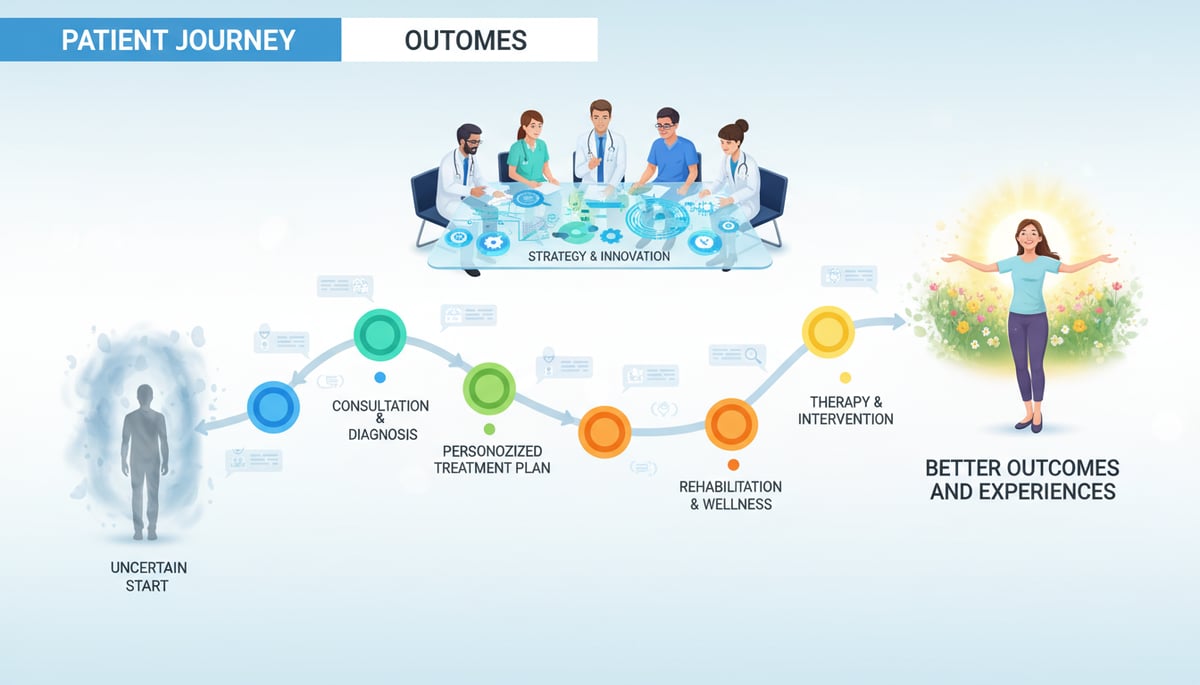
What is Patient Journey Mapping (and Why It’s Not Just a Process Flow)?
Understanding the patient's path through healthcare is paramount, and this is precisely where patient journey mapping shines. It visualizes the entire patient experience, capturing their actions, thoughts, and feelings at every interaction. From the first symptom to post-treatment recovery, this map illustrates the journey from their unique perspective.
Unlike an internal process flow, which focuses on staff tasks and departmental hand-offs, a journey map is built around the patient's lived reality. It reveals moments of hope, confusion, anxiety, and relief that traditional operational diagrams simply cannot. This approach humanizes the care process, making the patient’s emotional landscape visible to providers.

Note: Patient journey mapping is an emerging field of research that uses various methods to map patient experiences (PubMed research). This academic recognition underscores its shift from a simple exercise to a strategic tool for health systems.
The stakes in healthcare are significantly higher than in typical commercial customer journeys. Patients are often emotionally vulnerable, dealing with health concerns that impact their lives profoundly. This environment necessitates a meticulous approach, also navigating complex regulatory requirements like HIPAA (ZonkaFeedback).
Effective mapping helps us identify critical 'moments that matter'—those pivotal instances that either build or erode trust. Consider the anxiety of waiting for a medical diagnosis, the challenge of understanding a complex treatment plan, or the frustration of navigating billing issues. These are all touchpoints where the patient’s experience can be profoundly shaped. Case studies from the biopharma industry, for example, show how mapping helps design support services that remedy friction points and improve adherence (Courier Health). This makes the invisible experience tangible, leading to better, more empathetic care.
Patient journey mapping is an essential strategic framework that translates the abstract goal of patient-centricity into a concrete, actionable plan by focusing on the patient's holistic experience rather than isolated operational steps.
The Tangible Benefits: Improving Care, Efficiency, and Outcomes
Investing in patient journey mapping moves beyond empathy; it delivers concrete, measurable benefits across care, efficiency, and patient outcomes. By visualizing the patient's path, organizations can identify bottlenecks and communication gaps that hinder effective care delivery. This leads to streamlined processes, reducing patient wait times and minimizing administrative errors.
Mapping clarifies the patient's perspective, helping to break down traditional departmental silos like scheduling, clinical care, or billing. This fosters cross-functional collaboration, a key component of effective care coordination, cultivating a shared sense of ownership for the entire patient experience. Smoother journeys also reduce staff burnout and rework, leading to operational cost savings (AskNicely).
By pinpointing friction points that often lead to non-adherence, organizations can design better, more targeted interventions and support programs. This directly contributes to improved clinical outcomes and higher patient retention rates. For instance, biopharma companies utilize maps to track key metrics like patient starts, time-to-start, and discontinuation rates, ensuring better treatment success (Courier Health).
Data gathered through patient journey mapping provides a robust foundation for data-driven decision-making, a core principle of health informatics. Leaders can track key performance indicators (KPIs) such as time-to-treatment, patient satisfaction scores (NPS and CSAT), and readmission rates to measure impact directly (AskNicely). This continuous feedback loop ensures that improvements are not only implemented but also validated.
Key Benefits of Patient Journey Mapping:
- Enhanced Operational Efficiency: Identifies and resolves process bottlenecks, reducing wait times and administrative errors, leading to cost savings.
- Improved Patient Adherence: Pinpoints and addresses reasons for non-adherence, enabling better support programs and clinical outcomes.
- Stronger Cross-functional Collaboration: Breaks down departmental silos, fostering a unified approach to patient care and a shared sense of responsibility.
- Data-Driven Decision Making: Provides measurable insights to track KPIs, linking experience investments directly to patient retention and lifetime value (AskNicely).
Investing in patient journey mapping yields measurable returns by creating a more efficient, collaborative healthcare environment that directly contributes to better health outcomes and patient loyalty.
Deconstructing the Journey: A Framework of Key Stages
Every individual's path to health and well-being is deeply personal, often feeling intricate and overwhelming. Yet, beneath this complexity lies a series of universal experiences. While every patient's path is unique, understanding these core stages provides a consistent framework to identify critical touchpoints and deliver the right support at the right time. By deconstructing the patient journey into manageable phases, we can uncover vital opportunities to enhance care and build trust.
Imagine the patient journey as a five-pillar process, each stage building upon the last to create a complete care narrative. This digestible model helps healthcare providers structure their understanding and mapping efforts, making an impossibly complex task feel achievable.
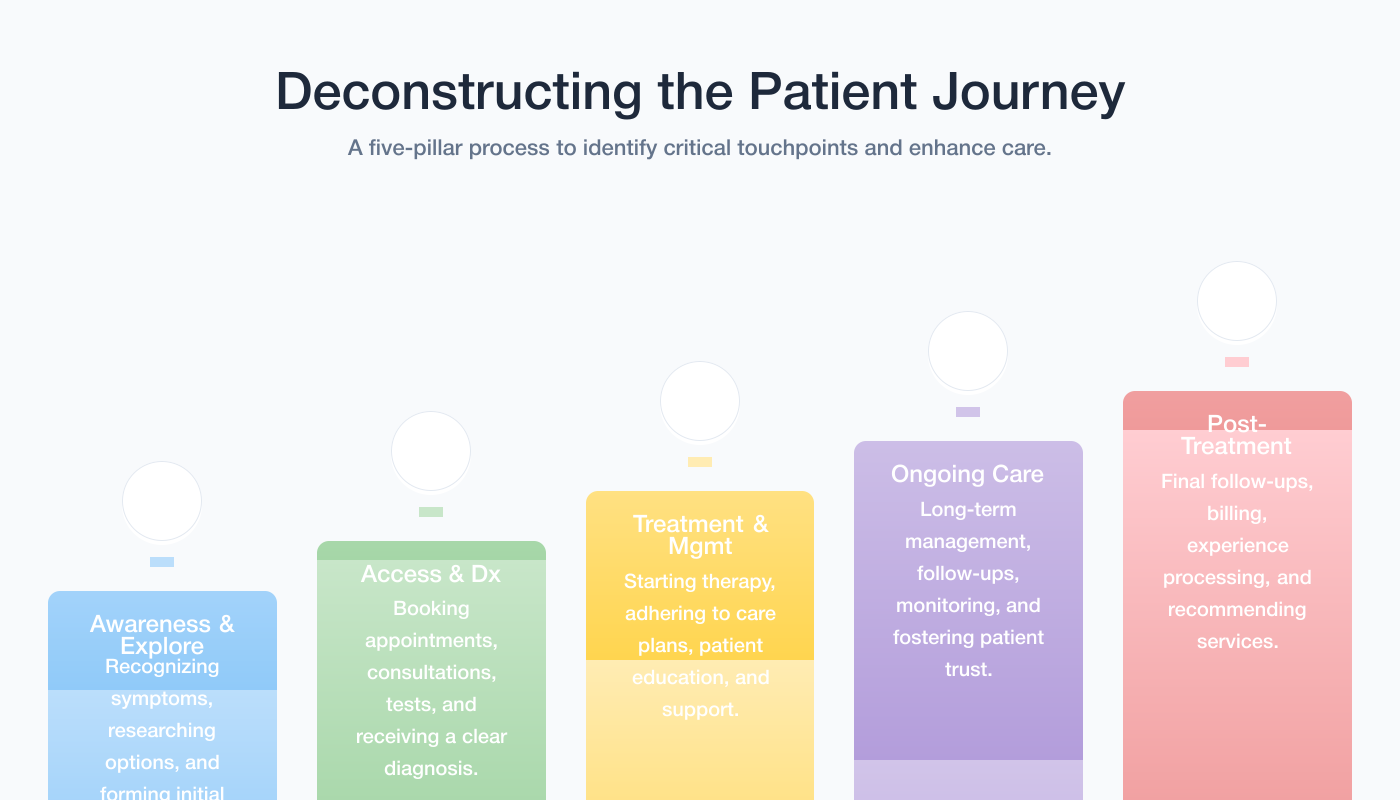
- Awareness & Exploration: The journey often begins long before a clinical encounter. This initial phase involves an individual recognizing symptoms or a need for care, followed by active research into potential conditions, treatment options, and healthcare providers. During this time, initial impressions are formed, making digital presence and word-of-mouth incredibly influential.
- Access & Diagnosis: This stage encompasses the practical steps of seeking care. It includes booking appointments, initial consultations, and the often-anxious period of waiting for test results. A clear and empathetic communication of a diagnosis and a proposed treatment plan is paramount here. The documented struggles of rare disease patients, who can spend 4-5 years in the diagnosis phase alone, highlight the critical need for efficiency and clarity in this stage (Courier Health).
- Treatment Initiation & Management: Once a diagnosis is made, this phase focuses on starting therapy or undergoing necessary procedures. It involves understanding and adhering to complex care plans, requiring significant patient education and ongoing support. Whether it's medication, surgery, or lifestyle changes, patient engagement is vital for successful outcomes.
- Ongoing Care & Adherence: For many conditions, especially chronic ones, the journey extends into long-term management. This involves regular follow-up appointments, continuous monitoring, and fostering a strong, enduring relationship with the care team. Proactive communication and convenient access to support are essential for maintaining patient adherence.
- Post-Treatment & Advocacy: The journey concludes with post-treatment care, which includes final follow-ups, managing billing, and processing the overall experience. The patient's decision to recommend services to others, driven by their overall satisfaction and perceived value, marks the ultimate advocacy point, an area where patient advocacy plays a key role. Feedback collection strategies are tailored to specific stages, such as post-booking or post-discharge, demonstrating the framework's practical application (ZonkaFeedback).
Real-world examples demonstrate the adaptability of this framework. The journey of a patient with a chronic condition like diabetes (The MSL Journal) will naturally involve more extended 'Ongoing Care and Adherence' compared to an acute injury patient whose 'Post-Treatment' phase might be shorter. Understanding these core stages is crucial for crafting truly patient-centric experiences that foster lasting trust and well-being.
How to Create a Patient Journey Map: A Step-by-Step Guide
Understanding the typical stages of a patient's experience is just the beginning. The real transformation happens when we actively map these journeys. Building an effective patient journey map is a structured, empathetic process that transforms raw data and patient stories into a strategic blueprint for meaningful change. It empowers healthcare organizations to visualize the patient's perspective, identify pain points, and pinpoint opportunities for improvement.
Here’s a practical, actionable process for building your first patient journey map:
Define Clear Objectives and Personas
Begin by clarifying what you aim to achieve with your map. Are you improving wait times, enhancing communication, or boosting adherence? Next, focus on a specific patient group, known as a patient persona. For instance, map the journey of a "new diabetic patient" or an "expectant mother." This focus makes the process manageable and ensures the map is relevant (The MSL Journal). Understand their demographic, motivations, and common concerns.
Gather Patient Insights
This step is about truly listening to your patients. Combine quantitative data, such as Net Promoter Score (NPS) or Customer Satisfaction (CSAT) surveys, with rich qualitative insights. Conduct patient interviews, shadow patients during their visits, or engage in focus groups. Involve multiple stakeholders—patients, caregivers, advocacy groups, and providers—to enrich the mapping process (Courier Health). The goal is to capture their unfiltered experiences, expectations, and perceptions at every touchpoint.
Map Touchpoints and Emotional States
Document every single interaction a patient has with your service. This includes direct interactions like phone calls, portal messages managed through EHR systems, consultations, and procedures, as well as indirect ones like navigating your website or receiving a bill. Crucially, layer in the patient's likely emotional state at each point—anxiety before diagnosis, confusion about instructions, or relief after successful treatment. This emotional dimension provides profound insights into their experience.
Visualize the Journey
Bring your collected data to life with a clear, shareable visual map. A timeline diagram or a swimlane diagram works effectively, illustrating the stages, patient actions, emotional highs and lows, and identified pain points. This visual representation serves as a powerful communication tool, making complex information digestible for all stakeholders. For example, a map might visually show how patient anxiety peaks during the waiting period for test results.
Identify Gaps and Opportunities for Improvement
With your journey map complete, critically analyze it to pinpoint where the experience breaks down. Look for inconsistencies, long wait times, communication failures, or points of high patient frustration. These "pain points" represent clear opportunities for intervention. Brainstorm concrete solutions and prioritize those that will have the most significant positive impact on the patient experience.
Validate, Iterate, and Act
A patient journey map is a living document, not a static report. Share your initial map with frontline staff, other departments, and even patients for feedback. This validation ensures its accuracy and practical applicability. Real-time feedback tools can automate data collection, making this process more efficient (AskNicely). Continuously optimize the map by regularly collecting feedback and analyzing data for recurring issues (ZonkaFeedback). The final step, 'Validate and Refine,' ensures the map is a practical tool for action, not just a theoretical exercise, to guide continuous improvement initiatives and foster a truly patient-centric environment.
The complexity of healthcare, especially for individuals navigating challenging diagnoses, often creates fragmented and confusing experiences. Patient journey mapping offers a powerful lens to transform these encounters from points of frustration into pathways of seamless, empathetic care. This strategic approach moves beyond superficial discussions, providing a tangible method to truly visualize and optimize every touchpoint.
Here are the key takeaways from our guide:
- Patient Journey Mapping is a Strategic Imperative: It's not just a diagram; it's a foundational framework for understanding the complete patient experience, bridging silos, and fostering a truly collaborative care environment.
- Deep Understanding Drives Better Decisions: By meticulously mapping patient touchpoints and emotional states, organizations can identify critical pain points and opportunities for intervention, leading to more informed and impactful improvements.
- Tangible Benefits Across the Board: Implementing patient journey mapping directly contributes to improved clinical outcomes, enhanced operational efficiency, greater patient satisfaction, and stronger, more lasting trust in healthcare providers.
Ultimately, embracing this methodology is not merely about process improvement; it's about fundamentally rethinking how care is delivered to ensure every interaction contributes positively to a patient's healing and confidence. It's about building a system centered around the human experience.
The shift from merely talking about patient-centric care to actively mapping and redesigning these critical pathways is imperative for any organization committed to genuine improvement. To begin, identify a specific patient cohort or service line, convene a multidisciplinary team, and dedicate time to understanding their journey from their perspective. This actionable insight is the first, crucial step towards creating a healthcare ecosystem that truly prioritizes the individual at its core, fostering better outcomes and experiences for everyone.
Tags
Related Articles
Beyond the Blog Post: Converting Health Education Content into Program Enrollment

From Blog Posts to Leads: Content That Actually Converts for SMBs